Polycarbonate · Screen / UV Printing

Lexan Label
Polycarbonate Label

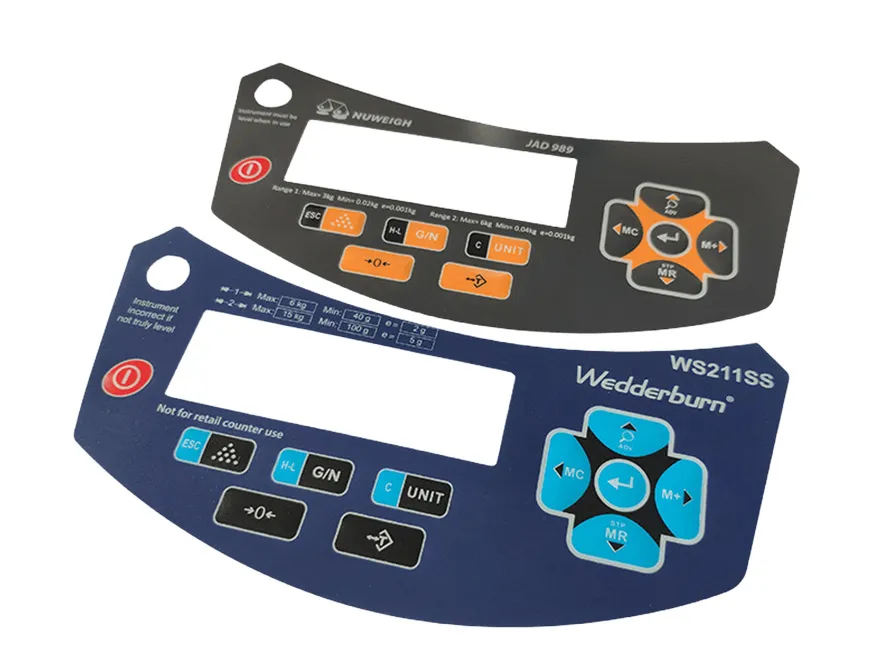
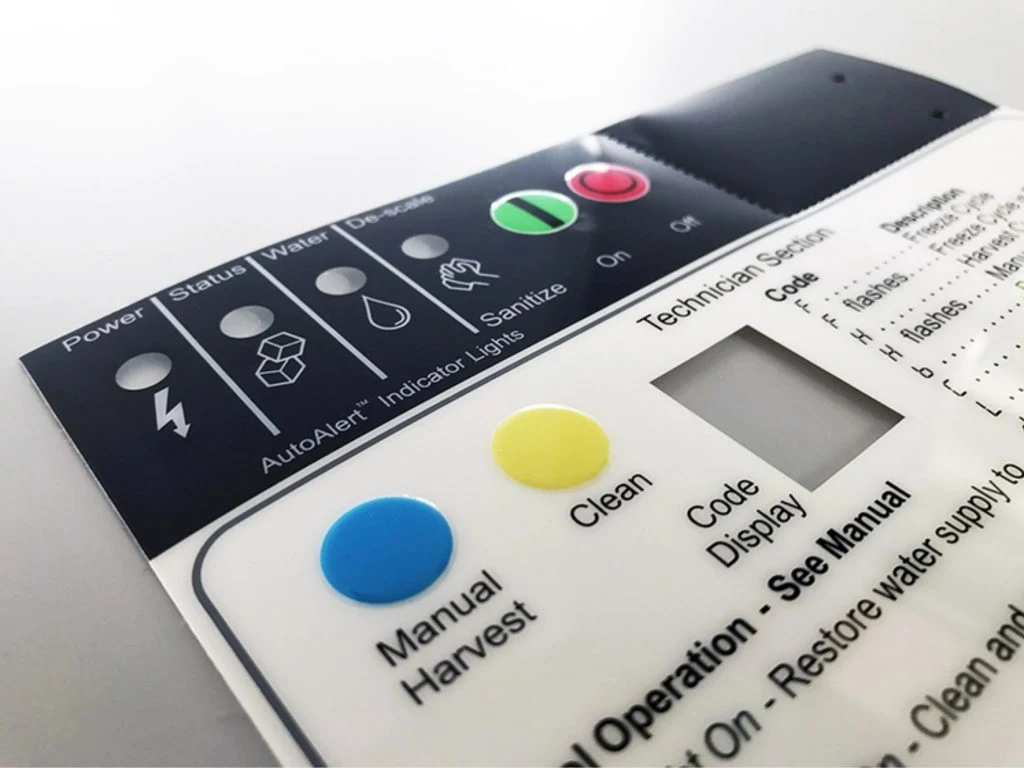
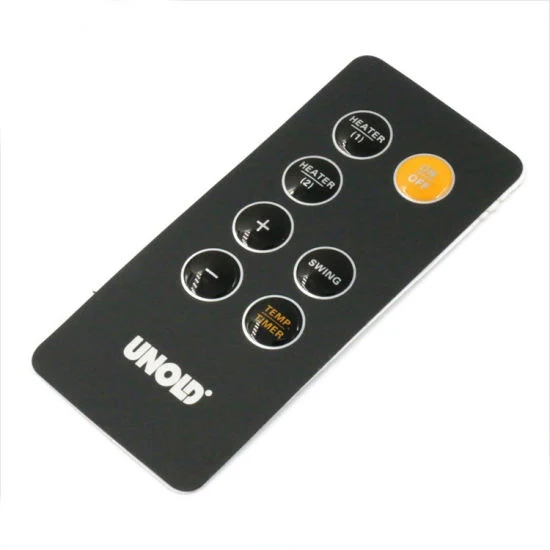
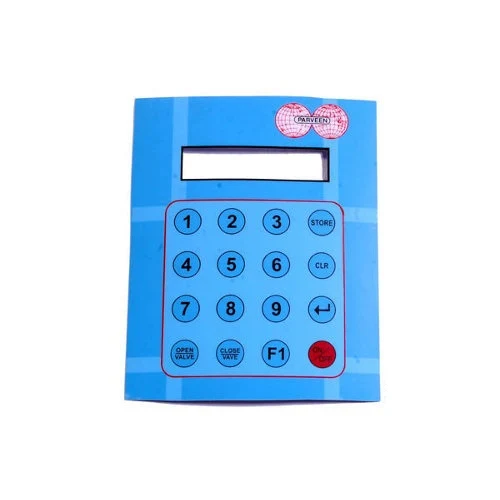
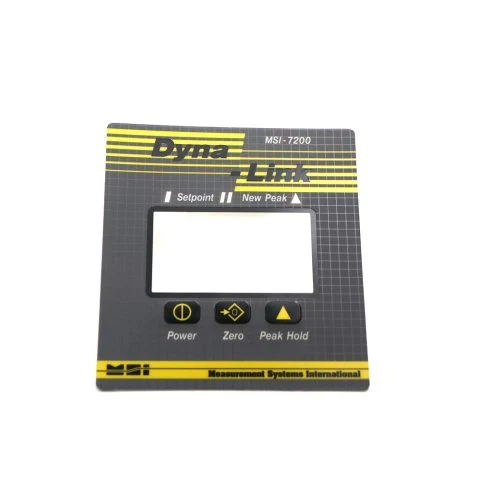
Reverse-printed Lexan labels — produced for control panels, machine front plates and industrial applications, offering years of durability. Matte, glossy or textured surface options.

Heat-resistant to 100°CUV stableReverse printLED compatibleIndoor & outdoor
Lexan polycarbonate label control panel — Bora Ajans
BORA AJANS · EST. 1983 · DUDULLU OSB
Technical Advantages

Why Lexan Label?

Reverse-Print Protection

Ink is printed on the reverse face of the transparent polycarbonate. The ink never contacts external influences — risk of abrasion, fading and scratching is near zero. Cheap PVC alternatives yellow and crack over time; Bora Ajans uses only polycarbonate (PC).

High Heat & Humidity Resistance

Resists temperatures up to 100°C, high humidity and harsh industrial chemicals. Performs reliably for years on machine bodies, oven panels and outdoor enclosures.

LED & Backlight Compatible

Transparent windows enable seamless LED integration. Diffusion ink homogenises light distribution. Ideal for automation control panels.

Custom Shape & Size

Adapted to any geometry by laser cut, blade cut or CNC. Cut-outs, slots and special contours are produced easily, with flexible MOQ.

Screen + UV Digital Printing

Both screen printing (high-volume, solid colours) and UV digital printing (low-volume, photographic full colour). Pantone matching and special effects available.

3M Adhesive & Easy Mounting

3M industrial adhesive applied to the reverse face. Peel-and-stick assembly in minutes; adhesive thickness selected for surface roughness.

Technical Data

Technical Specifications

Standard technical parameters are listed in the table below. For special requirements, please fill in our quote form.

PropertyStandard Value / OptionNotes
MaterialPolycarbonate (PC) Polyester (PET)LEXAN equivalent
Thickness0.125 mm – 3.0 mmStandard: 0.175 / 0.25 / 0.5 mm
Print MethodScreen Printing UV Digital Solvent PrintingReverse print
Colour SpaceCMYK + Pantone spot coloursMetallic, fluorescent inks available
Surface FinishGlossy Matte Semi-matte TexturedDiffuser (frosted) finish also available
Heat Resistance-40°C to +100°CUp to +150°C with polyester
Max Size1000 × 1500 mm (sheet format)Roll also available (narrow formats)
Adhesive3M 468MP 3M 467MP Double-sided foamAdhesive-free production also possible
UV ResistanceUL 94 V-0 grade availableSpecial UV-stable PC for outdoor
FormingLaser Cut Blade Cut CNC Press Die±0.2 mm tolerance
Min. OrderDetermined per requestPlease contact us
Lead Time5–10 business days (standard)Express: 2–3 business days (extra fee)
Industries

Application Areas

Control Panels
Machine control consoles, switchboard front plates, membrane-keypad overlays.
🖥️
Electronic Devices
Surface labels for printers, monitors, keyboards and home appliances. Compatible with industrial standards of brands such as Bosch and Samsung.
🏥
Medical Devices
Front plates of medical equipment, bedside monitors, laboratory instruments. RoHS-compliant material.
🚗
Automotive & Vehicles
Dashboard overlays, in-vehicle control labels. Resistant to high heat, humidity and vibration.
🔧
Industrial Machinery
CNC machine panels, press control front plates, industrial robot interface labels.
🏠
Home Appliances
Oven, washing-machine and refrigerator control-panel labels. Long-lasting glossy appearance.
🔒
Security Systems
Alarm panels, access-control keypads, security-camera labels.
⚙️
Automation Systems
PLC control panels, sensor labels, conveyor-line control systems.
FAQ

About Lexan Labels

Bora Ajans produces Lexan labels exclusively from polycarbonate (PC). Cheap PVC alternatives yellow, crack and discolour over time, ruining appearance and durability. Polycarbonate offers high impact strength, excellent thermal stability and lasting optical clarity. PVC is never used at Bora Ajans; all Lexan labels are produced from premium polycarbonate.
MOQ varies according to product specifications. Share your design and request — we will define the ideal quantity and price together.
AI (Adobe Illustrator), CDR (CorelDRAW), vector PDF and EPS are preferred. High-resolution (min. 300 dpi) PNG or JPG raster files are also accepted, but vector output quality is better. If you do not have a file, design support can be provided from a sketch or reference.
When UV-stable polycarbonate is used, long outdoor life is expected even with direct sunlight exposure. A dedicated UV-blocker coating can be added for outdoor applications.
Yes. Bora Ajans regularly ships to Germany, Austria, Switzerland and France under DDU conditions. Quotations are prepared in English; standard lead time is 5–10 business days. RoHS / REACH-compliant materials can be selected for EU customers.

What Is a Lexan Label? Polycarbonate Label Advantages

A Lexan label is an industrial-grade surface label produced on transparent polycarbonate (PC) or PVC film by reverse-print technology. The name "Lexan" derives from LEXAN® (SABIC), one of the world's leading polycarbonate brands, and has become a generic term for transparent PC labels in the industry. In Turkey it is the most preferred label type for machine front-panel labels, control-panel overlays, membrane-keypad surfaces and industrial control-cabinet plates.

Reverse-Print Technology

In conventional label printing, ink is applied to the front face of the substrate; in Lexan label production the print is applied to the reverse face. Once installed, the transparent PC/PVC layer protects the print from physical contact, chemicals and UV. This enables years of use without colour distortion, fading or scratching — a critical advantage for machine panels and high-cycle membrane keyboards in constant hand contact.

Bora Ajans Lexan Label Production Process

Operating in Istanbul Dudullu OSB, Bora Ajans has been producing Lexan labels since 1983. All production stages, from artwork preparation to cutting, are carried out under one roof:

  • Design & Pre-press: colour separation and printing film prepared in Adobe Illustrator or CorelDRAW.
  • Screen / UV Digital Printing: the right method is selected based on substrate and run length.
  • Cutting & Forming: laser or CNC contour cutting per design.
  • Adhesive Lamination: 3M industrial adhesive or double-sided tape is applied to the reverse.
  • Quality Control & Packaging: every batch passes visual and dimensional QC.

Lexan Label vs. Metal Label: Making the Right Choice

Lexan label is the ideal choice for lightweight, flexible and cost-effective applications. It is clearly preferable to metal labels where graphic content needs to change regularly, where complex colour gradients are required or where transparent windows are needed. Metal labels are preferred where extreme mechanical impact, abrasion resistance and constant chemical exposure are involved.

Common Industry Terminology

A Lexan label is also known as polycarbonate label, PC overlay, graphic overlay, lexan label, membrane keypad overlay, control panel label, Folientastatur (German), étiquette polycarbonate (French). Bora Ajans provides English-language quotations aligned with all of these international terms.

Looking for a PVC label? PVC labels were widely used in the industry for many years but are now being replaced by Lexan (polycarbonate) labels. PVC stiffens over time, has low chemical resistance and releases chlorine gas under flame. Bora Ajans recommends polycarbonate (Lexan) labels instead of PVC for industrial applications. The full technical comparison is below.

What Is a Lexan Label? Industrial Definition of Polycarbonate Labels

A Lexan label is a high-durability industrial graphic overlay produced on polycarbonate (PC) film with special UV inks or screen printing using reverse-print technology. The name "Lexan" comes from SABIC's Lexan® polycarbonate film and has become the generic name for polycarbonate labels in the industry. Bora Ajans has been producing Lexan labels since 1983 in Istanbul Dudullu OSB.

In reverse-print technology, ink is applied to the rear face of the film and is read through the transparent front. This protects the print from mechanical wear, solvents and daily handling. It is the longest-lasting label solution for surfaces exposed to friction such as control panels and machine front plates.

Technical Advantages of Lexan Labels

Reverse Print: Print Surface Is Protected, Colour Does Not Fade

In conventional surface printing, ink is exposed and fades and scratches over time. In a Lexan label the print is on the rear; the outward face is just transparent polycarbonate film. This isolates the print from detergent, oil, thinner and mechanical wear. Even after 10+ years of factory use it retains its original appearance.

High Heat and Chemical Resistance

Polycarbonate retains its mechanical properties between -40°C and +130°C. This wide range covers extreme-condition applications such as oven control panels, engine-bay labels and cold-storage equipment where polyethylene (PE) or PVC alternatives fall short. Chlorine-free polycarbonate also slows flame propagation, an advantage for industrial safety standards.

LED and Backlight Compatibility

Prints on transparent or frosted (matte) polycarbonate film provide homogeneous light transmission for LED applications. It is the only material group preferred for membrane-keyboard and backlit control-panel production. Light transmittance can be tuned by design with film thicknesses from 0.125 mm to 0.5 mm.

Technical Specification Table

PropertyValue / Option
MaterialPolycarbonate (PC) film — Lexan® or equivalent
Thickness0.125 / 0.175 / 0.25 / 0.375 / 0.5 mm
Print MethodReverse screen or UV digital printing
ColourCMYK full colour + Pantone spot colour
Temperature Range-40°C to +130°C
SurfaceGlossy / Matte / Textured (frosted)
Adhesive3M 467MP / 468MP double-sided or none
Special ProcessesShape cut, holes, corner radii, embossing

Lexan Label vs Polyester Label — Which Is Right?

The most common question in industrial label selection is the difference between Lexan (polycarbonate) and polyester (PET). Both are plastic films, but their technical properties point to different application scenarios.

PropertyLexan (PC)Polyester (PET)
Impact Resistance✓ Very HighMedium
Print MethodReverse printSurface print
Print Protection✓ Full protectionSurface exposed
Temperature-40 / +130°C-40 / +150°C
LED Compatibility✓ ExcellentGood
CostMedium✓ Lower
Preferred UseControl panel, membrane keypadOutdoor label, nameplate

PVC Label vs Lexan Label — Why PVC Should Be Avoided

PVC (polyvinyl chloride) labels are widespread because of their low cost, but they show serious limitations in industrial applications that require heat and chemical resistance. PVC stiffens and becomes brittle over time, especially in cold environments. The print is on the surface, so it has low resistance to detergents and solvents. It releases chlorine gas under flame, creating issues against industrial safety standards. Lexan label (polycarbonate) is chlorine-free, retains flexibility even at -40°C, and its reverse-print technology fully protects the print.

Industrial Use Cases of Lexan Labels

Lexan label is the first choice for any application that is exposed directly to abrasion or that requires long life:

  • Machine control-panel front plates: CNC machines, compressors, pumps and automation system front faces. Key cut-outs, windows and LED indicators are formed by cutting the polycarbonate film.
  • Home-appliance control surfaces: washing-machine, refrigerator and oven surface graphics. Superior resistance to humidity, detergents and mechanical wear.
  • Medical device labels: resistant to sterilising chemicals, alcohol and chlorhexidine; disinfection-friendly surface.
  • In-vehicle control panels: automobiles, construction machinery and on-board consoles. Stable against high temperature differences and UV radiation.
  • Energy and electrical sector: graphic overlays for energy meters, distribution panels and electrical equipment. UL/CSA standards can be met.
  • Membrane keypad: a touch-sensitive PC film with conductive printing, integrated with membrane keyboards and touch panels.

Lexan Label Production Process — How It Is Done at Bora Ajans

Bora Ajans follows these steps in Lexan label production: (1) the design file (AI, CDR or PDF) is taken in for technical review. (2) Colour and material selection is determined together with the customer. (3) Colour separation is done for screen printing; for UV digital printing the file is sent directly to the machine. (4) Print is applied to the rear face of the transparent polycarbonate film. (5) An opaque white or black coating is applied to the rear (to mask the background). (6) Adhesive (optional) and a protective coating are applied. (7) Shape cutting is performed by CNC or plotter. (8) Quality control and packaging.

International Terminology — How Lexan Labels Are Known Worldwide

Lexan labels are recognised by different names in different markets: graphic overlay (USA, UK), front panel label, polycarbonate label, Polycarbonat-Etikett or PC-Folie (Germany/Austria), étiquette polycarbonate (France). Bora Ajans exports under DDU conditions to Germany, Austria, Switzerland and France using these international terms.

Request a Lexan Label Quote

Share dimensions, quantity and design — your quote arrives within 24 hours.

placeholder